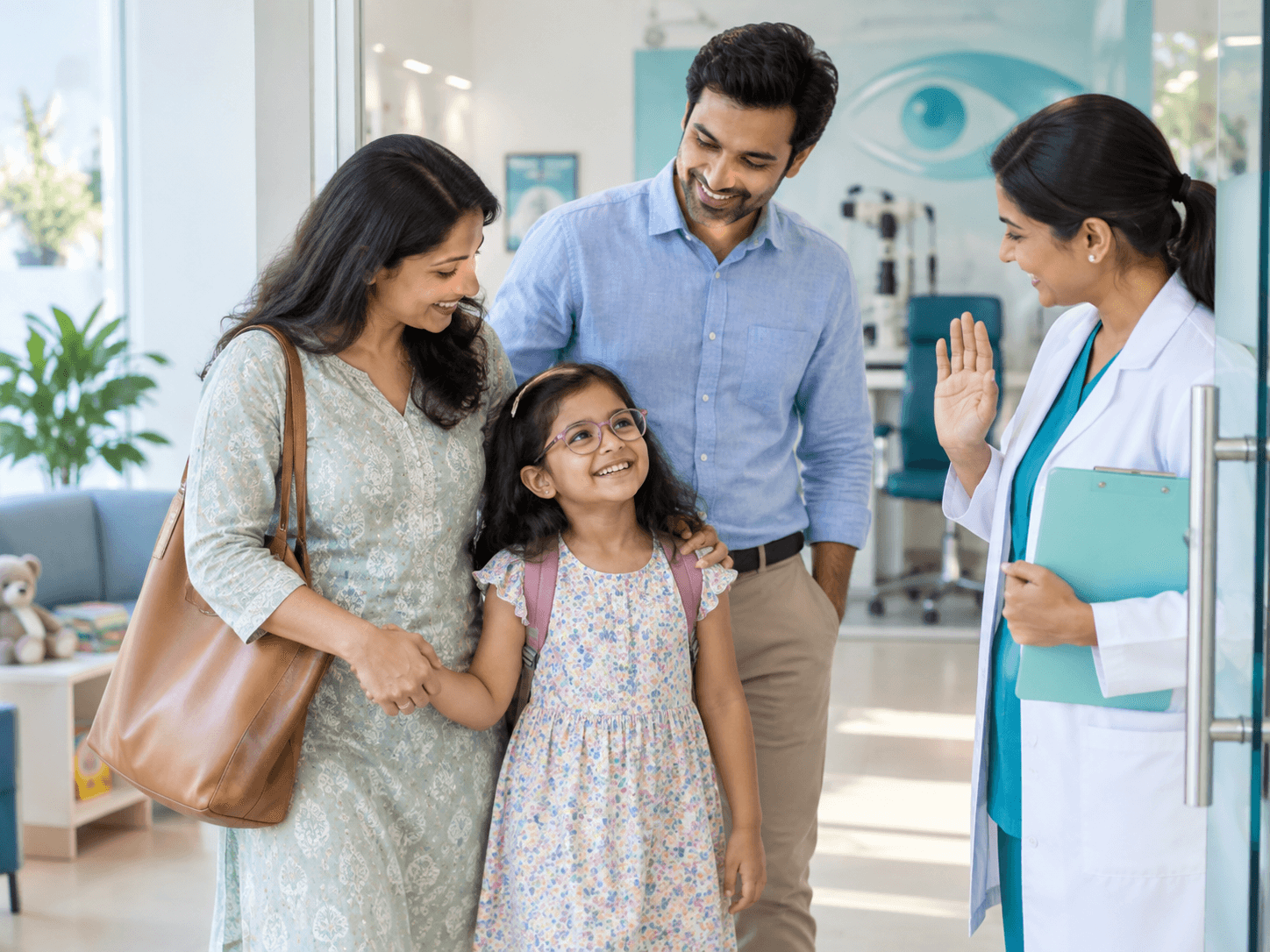
Visual development
Pediatric eye care focuses on the eye health and vision development of babies, children and teenagers. Early checks can find concerns that may affect learning, coordination and lifelong sight.
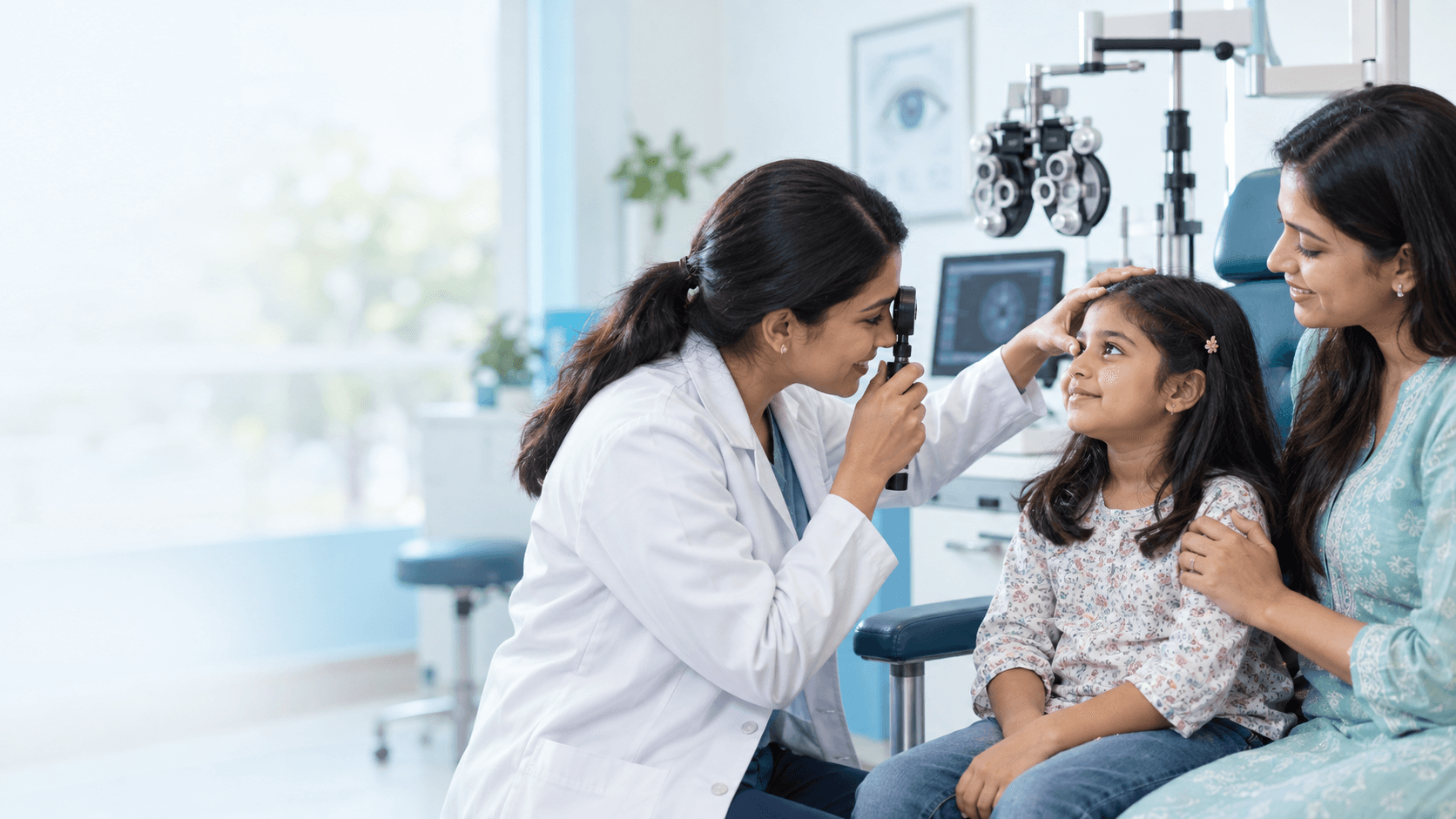
Children's eye care
Every child sees the world differently. Our gentle, age-appropriate eye checks help find concerns early and make each visit feel comfortable for children and parents.
Gentle eye checks designed around your child
Squint & lazy eye assessment and care
School-age vision checks for clearer learning
Specialist eye assessment, vision development support and gentle treatment created for young, developing eyes.
Pediatric eye care focuses on the eye health and vision development of babies, children and teenagers. Early checks can find concerns that may affect learning, coordination and lifelong sight.
Clear vision in childhood supports learning and confidence. Early detection gives treatment the best opportunity to help.
From simple picture-based checks to refraction, eye-alignment testing and detailed examination, every step is adapted to your child's age and comfort.
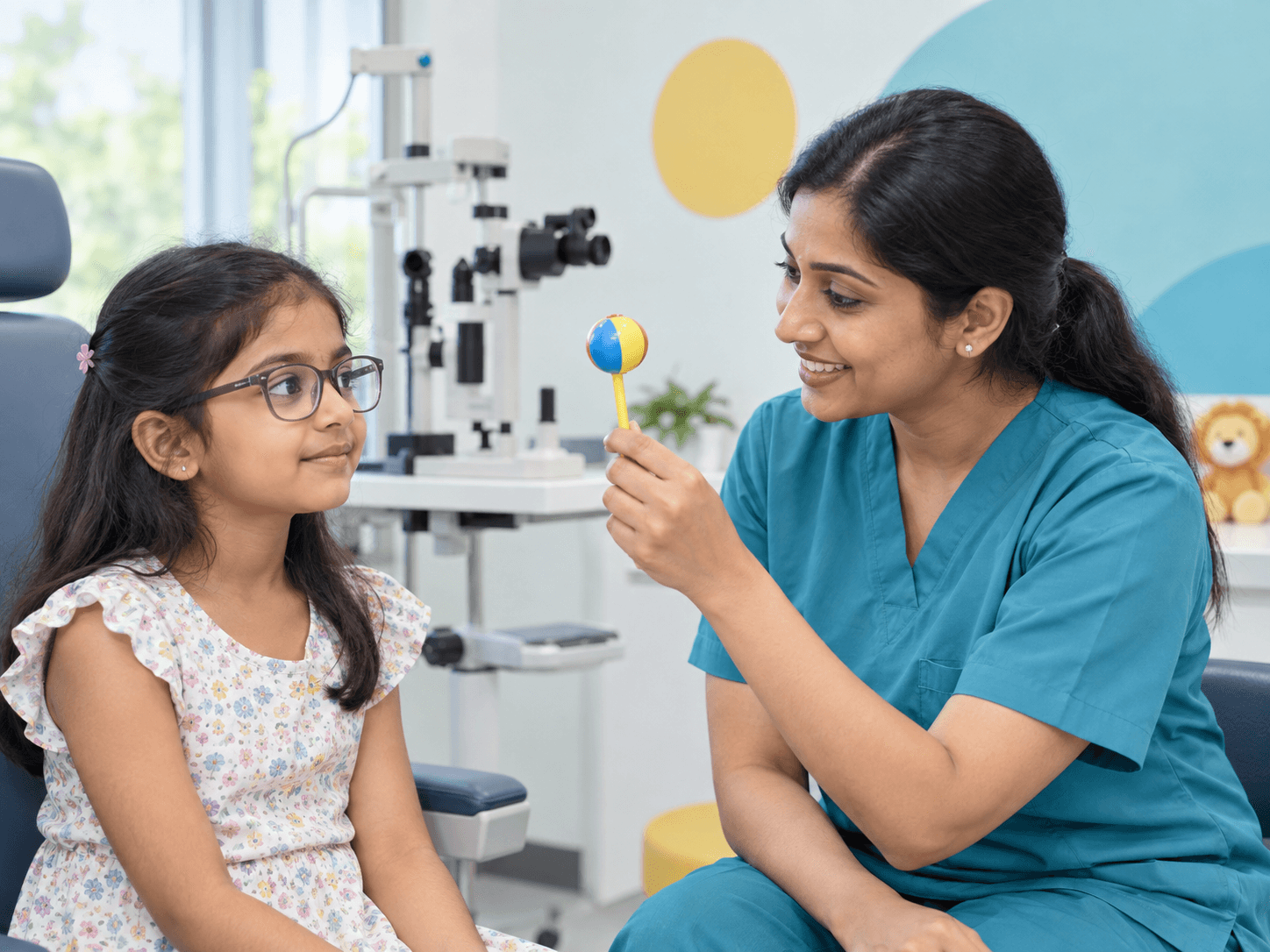

Early years matterThe visual system develops rapidly during childhood.
Early actioncan make care simpler and more effective
Why choose us
Specialist pediatric expertise, child-friendly examinations and clear guidance for families across Gandhidham and the Kutch region.
Children are seen by our pediatric ophthalmologist and squint surgeon, Dr. Ankit Shah – Diploma in Ophthalmology, DNB Ophthalmology, for specialist assessment and treatment.
A dedicated paediatric examination lane keeps visits calm, focused and comfortable for young children and their parents.
Picture-based charts and playful vision activities are adapted to your child's age, so even young children can take part.
Assessment and management of squint and amblyopia, from glasses and patching to squint surgery where it is needed.
Retinoscopy, refraction, slit-lamp examination and retinal imaging support a detailed assessment in a single visit.
Findings and next steps are explained clearly, with guidance on follow-up and eligible insurance or TPA documentation.
Clear explanations and practical advice help parents support their child's vision care and compliance at home.
Consultations are supported in English, Hindi and Gujarati to help children and families understand their care.
Pediatric clinical guidance
Repeated squinting, chin-up posture or a consistent head turn can be a child's way of finding a clearer view.
Clinical next step: comprehensive pediatric eye assessmentMoving unusually close to reading material or screens can sometimes indicate difficulty seeing clearly at a normal distance.
Ongoing rubbing, excessive blinking, watering or tired eyes deserves attention, particularly when it recurs.
Headaches after reading, losing place on a page or avoiding near work may be linked to a vision concern.
Regularly closing one eye in bright light or when concentrating can be associated with an eye-alignment problem.
Copying incorrectly, losing attention during distance tasks or repeatedly asking to move closer may point to unclear distance vision.
An eye that turns inward, outward, upward or downward—even if it happens only sometimes—should be examined by an eye specialist.
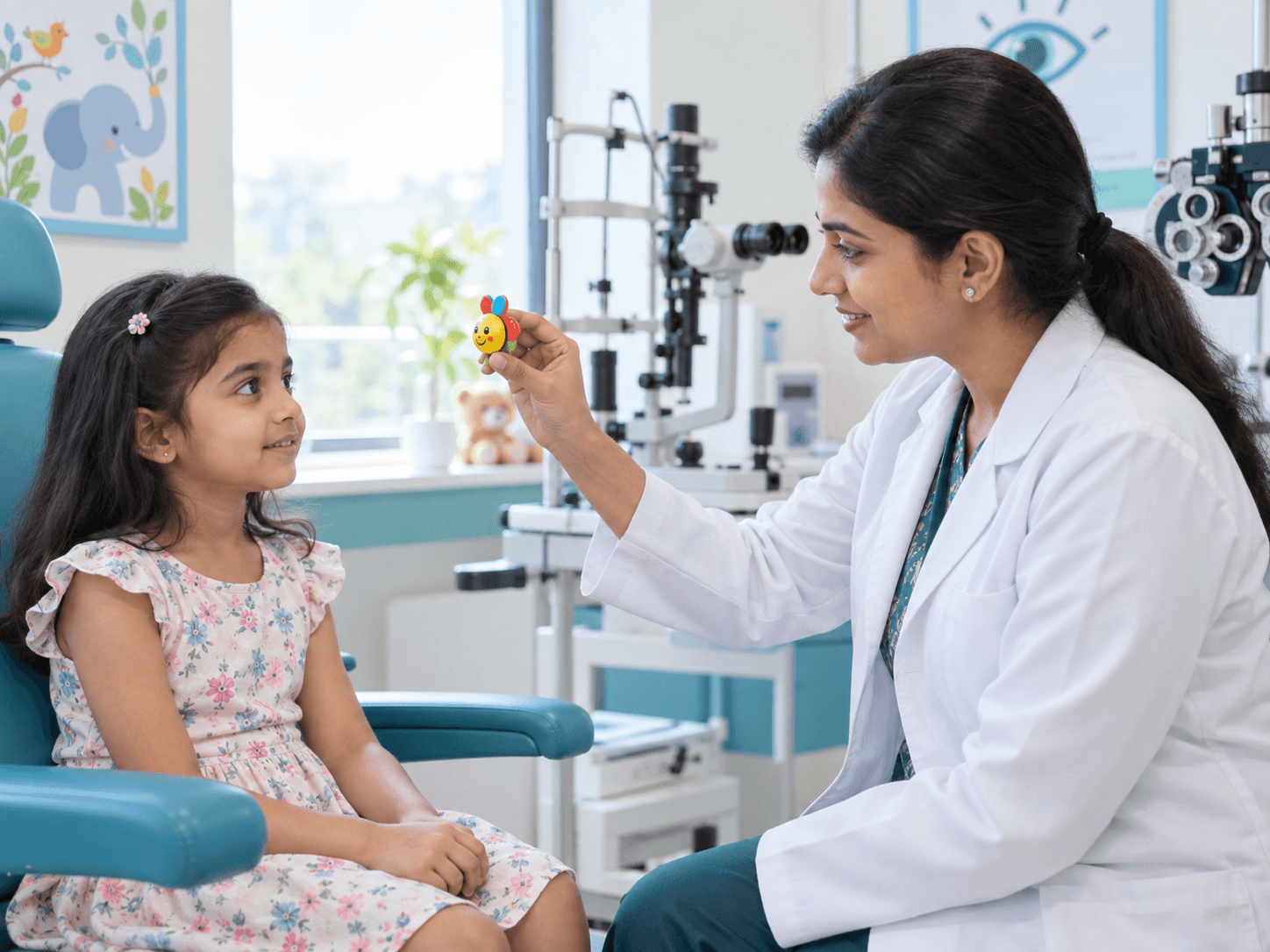
 Child-friendly
Clinical care advisory
Treatment options
From vision testing and glasses to lazy eye and squint care, every treatment is planned around your child's age, eye findings and comfort.
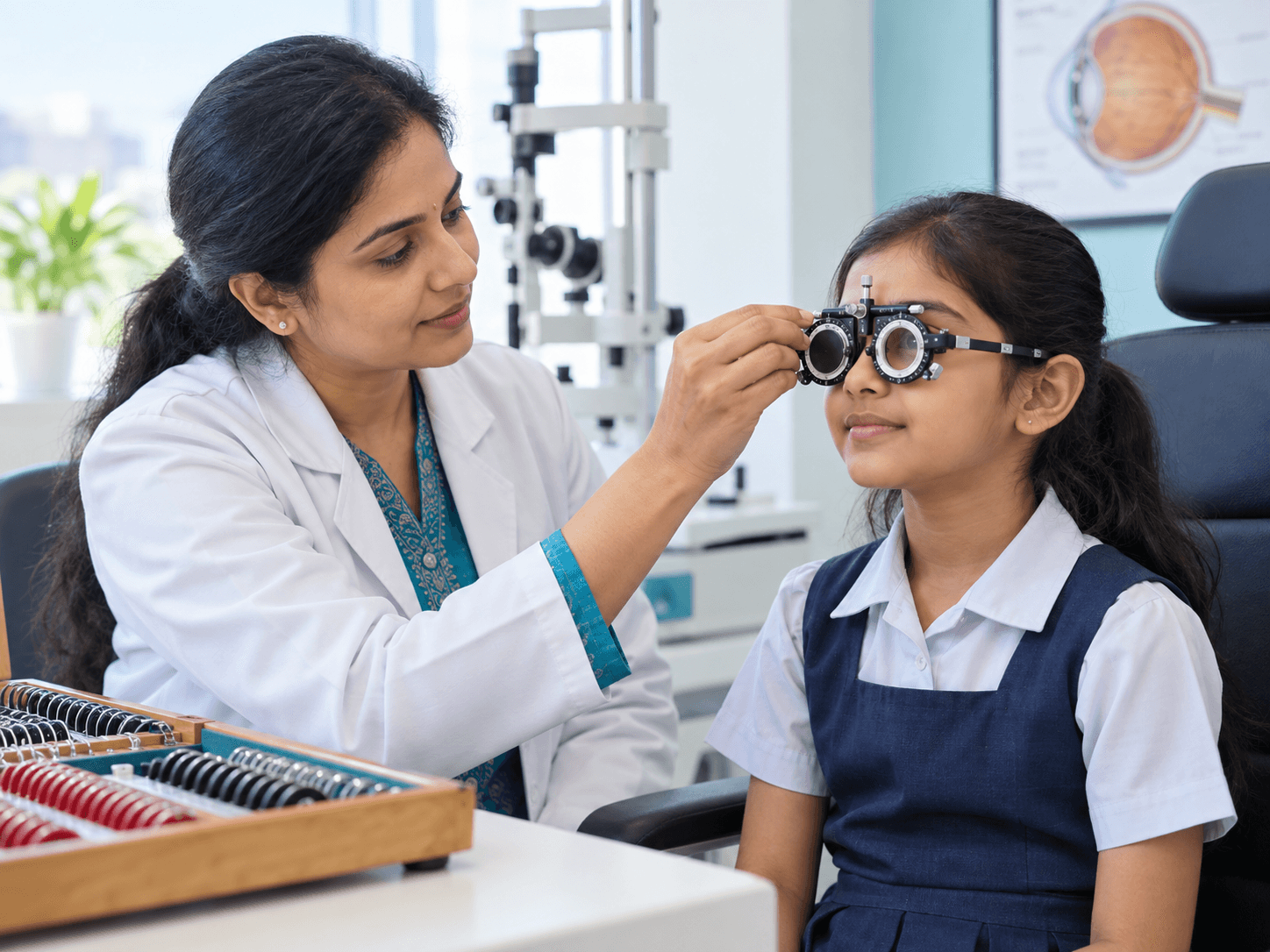
Careful refraction finds short-sight, long-sight or astigmatism, with glasses prescribed to support clear, comfortable vision at school and play.

When one eye has not developed clear vision, treatment such as glasses and patching helps the weaker eye and brain learn to work together.

Detailed eye-alignment assessment, with non-surgical options or squint surgery by our pediatric ophthalmologist and squint surgeon where needed.

Examination and management of eye conditions present from birth or early childhood, with a clear plan and follow-up explained to parents.
The right treatment depends on your child's age, eye findings and response to care. Your doctor will explain the recommended plan, expected benefits and follow-up.
Children rarely complain about their vision. Timely eye checks and treatment aim to support clear, comfortable sight as your child grows.

A clear explanation of your child's eye health and next steps helps families plan care with confidence.

Correcting a vision problem can make reading, writing and seeing the board more comfortable for your child.

Regular checks can find concerns such as lazy eye or squint while treatment has the best opportunity to help.
Results vary with each child's condition, age at diagnosis and how consistently treatment is followed. Your doctor will discuss realistic expectations with you.
Patient Care
Our team provides eye consultations, diagnostic evaluations and treatment planning based on each patient's individual eye health needs.
Eye examinations help our doctors assess your symptoms and eye health to determine the appropriate next steps for your care.
Eye examinations and diagnostic tests help our doctors assess eye conditions and guide clinical decisions.
Our doctors discuss suitable treatment options and recommend follow-up care according to each patient's individual needs.
Helpful guidance for parents about children's eye checks, glasses, lazy eye, squint and what to expect from your child's visit.
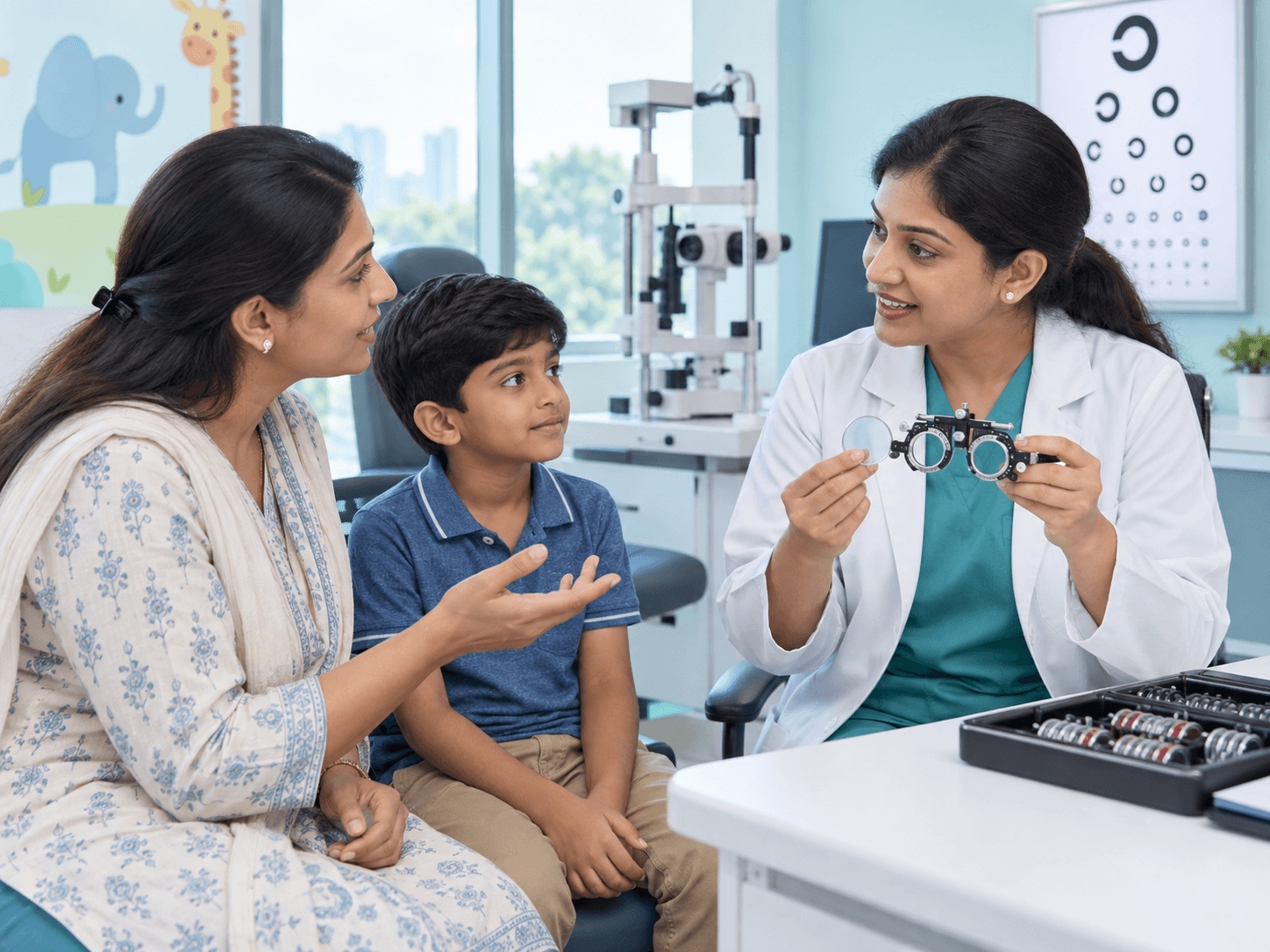
We recommend a comprehensive eye check before your child starts school — or earlier if you notice warning signs such as squinting, frequent eye rubbing, an eye that turns, or difficulty seeing the board.
Yes. Young children are tested with picture-based charts, shapes and simple play-based activities. Each part of the examination is adapted to your child's age and comfort.
Dilating drops are often used in children to check the true glasses power and to examine the back of the eye. They can cause temporary blurred near vision and light sensitivity for a few hours. The doctor will explain whether drops are needed for your child.
A squint or lazy eye should not be left to see whether it improves. Some treatments work best during early childhood, so an eye turn — even one that appears only occasionally — should be assessed by an eye specialist.
Not always. Depending on the type of squint, glasses, patching or other treatment may be tried first. If surgery is recommended, it is planned and performed by our pediatric ophthalmologist and squint surgeon.
This depends on your child's age, eye findings and any glasses prescription. Children who wear glasses usually need regular reviews as their eyes grow. Your doctor will advise a suitable follow-up interval.
Please bring your child's current glasses, any previous eye reports or prescriptions, and your insurance details if applicable. A favourite toy or snack can help younger children feel comfortable.
Take the first step
Book a pediatric eye check to discuss your concerns, your child's vision and suitable next steps with the Neyani Eye Hospital team.
Your child's visit includes an age-appropriate eye examination and a clear explanation for parents.